

One Burn After Another
A rare screening. A real burn. An unexpected truth.

I thought this would be the easiest Substack I’d ever write.
Paul Thomas Anderson. One Battle After Another. VistaVision print. Full house. A classic LA theater buzzing with reverence. I hadn’t even sat down before I was drafting this post, part review, part ritual, part reminder why film matters.
And for a while, it did.
The vibe was pure Old Hollywood. Velvet seats. Hushed buzz. Popcorn in the air. A building older than everyone inside it. I’m not old enough to have lived through the heyday of projection, but I chase it whenever it resurfaces. Oppenheimer in 70mm at the Chinese. Dunkirk in film. And now, VistaVision for the first time.
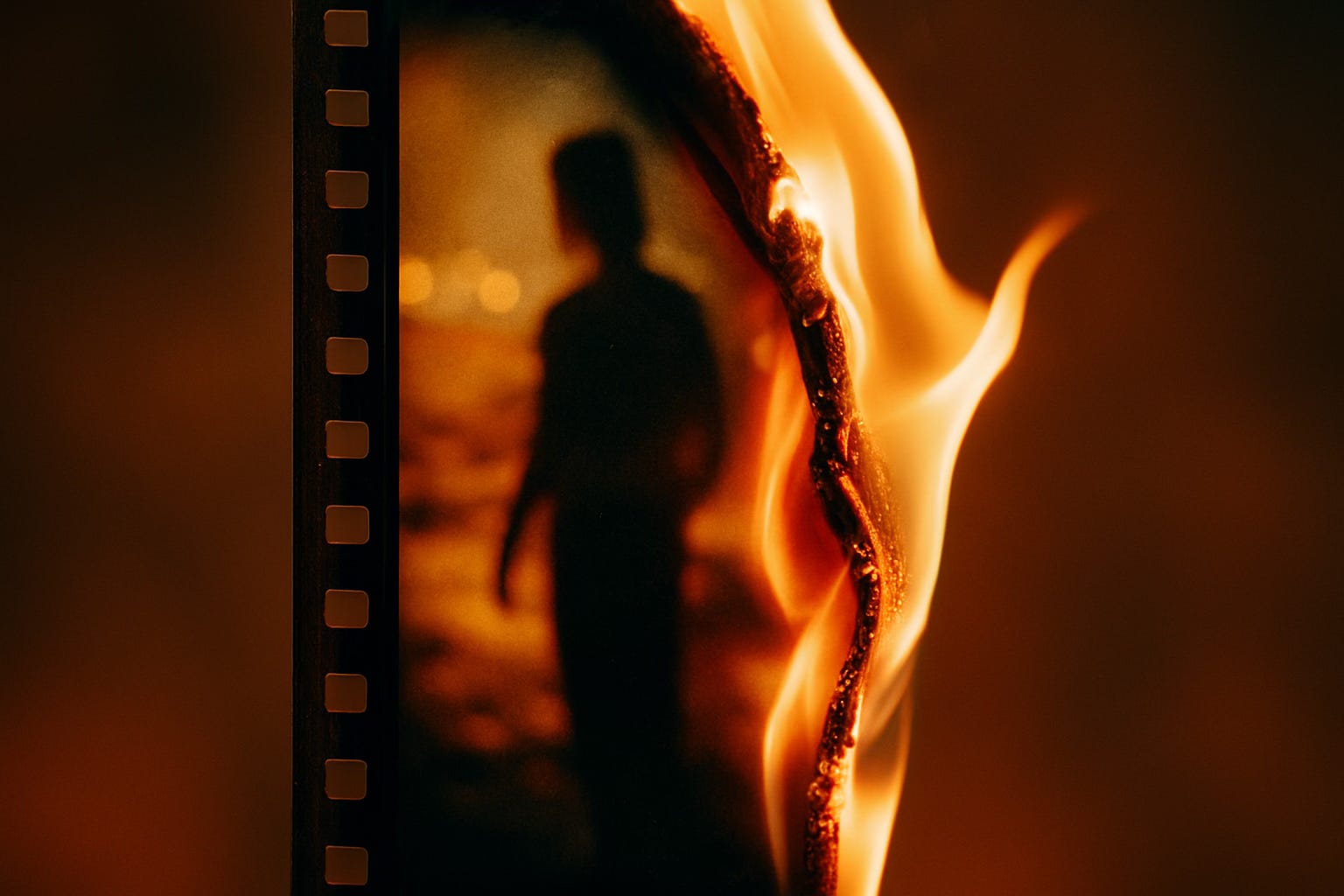
The film played great. The crowd was in it. And then it burned.
Mid-screening. Frame ripples. A sudden white flash. Silence. Full shutdown.
The audience cheered. We waited. Someone bought concessions for the row behind them. It was, sincerely, a moment.
The kind of moment you text people about afterward, just to say:
“You had to be there.”
I could already see the paragraph forming about the magic of analog, the warmth of imperfection, the soul of a format that refuses to die.
And then… I sat with it.
The magic was real. But it didn’t stay.
That surprised me.
The Relic
For the uninitiated: VistaVision was once the crown jewel of wide-format filmmaking. It gave us The Ten Commandments, Vertigo, and a kind of crisp, luxurious color that made film students weep. It was bold. Rich. Cinematic in the full sense of the word.
But it’s also… kind of a relic.
As of 2025, over 95% of films are shot digitally. Theaters running VistaVision prints are holding on by fingernails or by PTA, Nolan, and Tarantino. You don’t stumble into one of these screenings; you pilgrimage. You plan your week around it. You want it to matter.
But then it burned again. And again. Later screenings had so many interruptions, they eventually had to switch to digital.
The VistaVision print, the whole point, became the flaw. A raw, flammable nuisance.
A treasure to a liability.
The Trade-Off
Here’s where I have to admit something about me.
I come from the world of theme parks. I love 4DX. I value the performance of performance when a space works with you, not against you. I treasure the reliability of spectacle. It’s baked into how I view immersion.
So for me, film isn’t just about nostalgia. It’s about execution.
And when a theater leans on a format this volatile… it better be worth the margin.
So, Would I?
I still love film. I still believe analog has soul.
It’s not the format’s fault. It’s the infrastructure, what it takes to sustain formats like this gets harder every year.
Some experiences are beautiful because they’re rare, because they happen once, before they begin to feel like a reenactment. But when they burn… again, and again, and again?
One burn after another.
Would I go again? Maybe.
Would I recommend it to others? Probably.
Do I feel changed?
Not really.
And maybe that’s what caught me off guard that something I planned two months around, something that felt so tactile and right in the moment… left behind little more than a slight smile.
And a shrug.
Not a warning.
Not a eulogy.
Just a quiet little truth.
YOUR TURN!
Have you ever gone out of your way to catch a film projected on actual film—35mm, 70mm, VistaVision, the real deal?
Would you do it again?
Would you do it for the first time?
Let me know in the comments! I’m curious where the line is for others.
I loved watching all the restored films at Il Cinema Ritrovato in Italy! An experience like that is absolutely worth the hype and energy in my opinion, because the entire event is about restoring lost films of the past. But if I were to go out of my way to a specific screening, it’d have to be for a story that was super enticing. Just the fact something was filmed on film isn’t enough for me. The content matters most.